Specialist Trenchless Services
TRENCHLESS CONSTRUCTION is a non-invasive method of installing, replacing, or rehabilitating underground pipelines, ducts, and services without the need for extensive surface excavation.
Using specialised trenchless construction methods such as Horizontal Directional Drilling (HDD), Services Scanning and Pipe Cracking, infrastructure can be installed beneath roads, rail, wetlands, driveways, rivers, and built environments with minimal disruption.
Across the Services Sectors of water, sewer, and stormwater pipelines and electrical, fibre optic, gas, and biofuel sleeving, Rolkon combines technical expertise, specialised equipment, and experienced crews to deliver safer, smarter, and more efficient underground infrastructure solutions that support municipalities, developers, engineers, contractors, and parastatals with practical, planning-led solutions.
See our trenchless construction projects:
Why Go Trenchless?
Trenchless construction provides a smarter, less disruptive way to install, replace, and rehabilitate underground pipelines, ducts, and services beneath roads, rail, wetlands, rivers, driveways, and built environments.
As South Africa faces ageing infrastructure, growing urban density, and increasing pressure on service delivery, trenchless construction offers practical advantages across water, sewer, stormwater, electrical, fibre optic, gas, and pipeline rehabilitation projects.
- REDUCED DISRUPTION – Trenchless methods minimise disruption to roads, traffic flow, businesses, communities, and active construction environments.
- ENVIRONMENTAL PROTECTION – Underground infrastructure can be installed or replaced with minimal impact on wetlands, waterways, vegetation, and sensitive environments.
- FASTER PROJECT DELIVERY – With less excavation and reduced reinstatement requirements, trenchless construction can shorten project timelines and improve efficiency.
- LOWER LIFECYCLE COSTS – Reduced rehabilitation, less surface damage, and minimised disruption can significantly reduce overall project costs.
- IMPROVED SAFETY – By limiting open excavation, trenchless construction reduces risks associated with trench collapse, traffic diversions, and exposed work areas.
- SMARTER INFRASTRUCTURE DELIVERY – Through planning-led delivery, GPR scanning, and precision drilling, trenchless construction helps reduce rework, minimise risk, and improve project outcomes.
Horizontal Directional Drilling
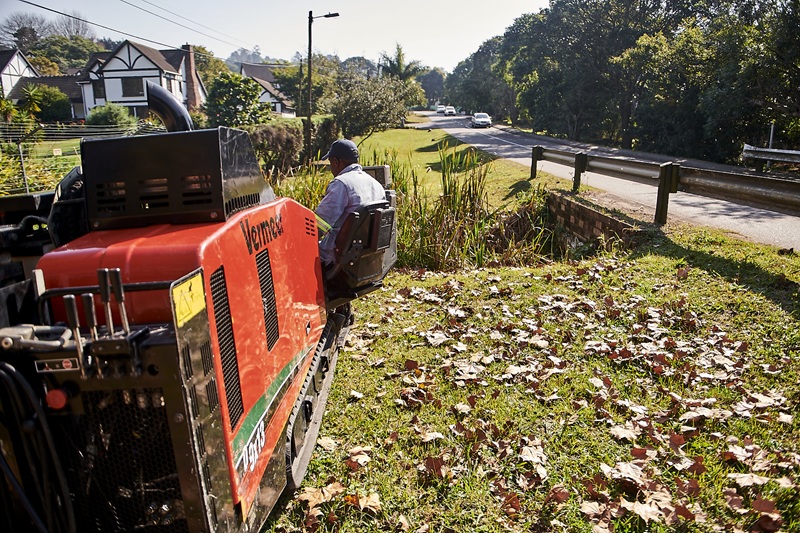
Horizontal Directional Drilling (HDD) uses a surface launched drilling rig to install underground pipelines and utilities in a prescribed path bore (straight or curved).
Used when conventional trenching is not practical or when minimal surface disturbance is required, it is ideal for crossing any number of surface obstacles, including roadways, railroads, wetlands, and water bodies of varying sizes and depths.
See our team in action under our Projects Page
Pipe Cracking / Bursting
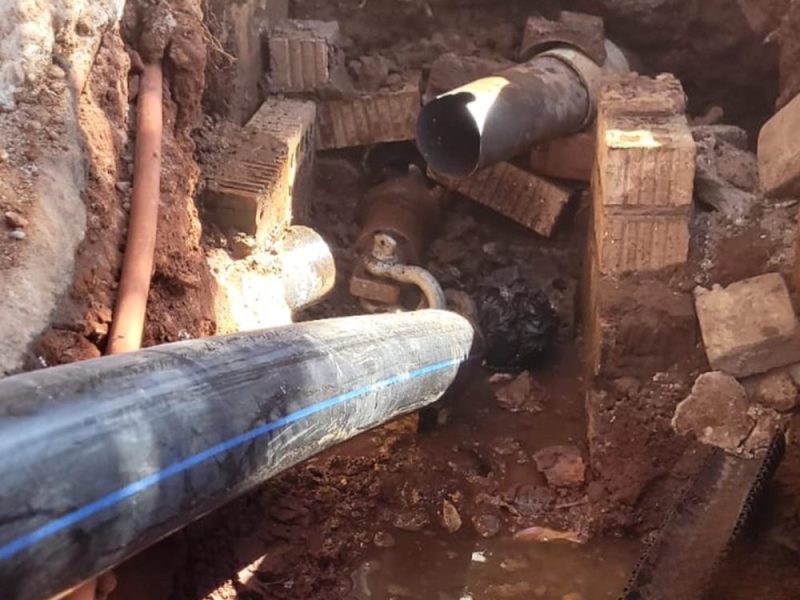
Pipe Cracking (or Pipe Bursting) is a trenchless method of replacing ageing underground water, sewer, and stormwater pipelines along their existing route -without the need for extensive excavation.
Rather than digging up and removing the old pipe, a specialised bursting head is pulled through the existing pipeline, fracturing it into the surrounding soil while simultaneously pulling the new pipe into place. This eliminates the need for a new bore and significantly reduces disruption to roads, traffic, businesses, and surrounding infrastructure.
With much of South Africa’s underground reticulation network reaching the end of its design life, pipe cracking is an efficient solution with Key Benefits including:
- Minimal excavation and surface disruption
- Faster and more cost-effective than traditional trenching
- Reduced rehabilitation and reinstatement costs
- Suitable for replacing water, sewer, and stormwater pipelines
- Existing pipes of almost any material can be replaced with new pipes of the same or larger diameter
- Safer for pedestrians, traffic, and sensitive environments
See our team in action under our Projects Page
Services Scanning
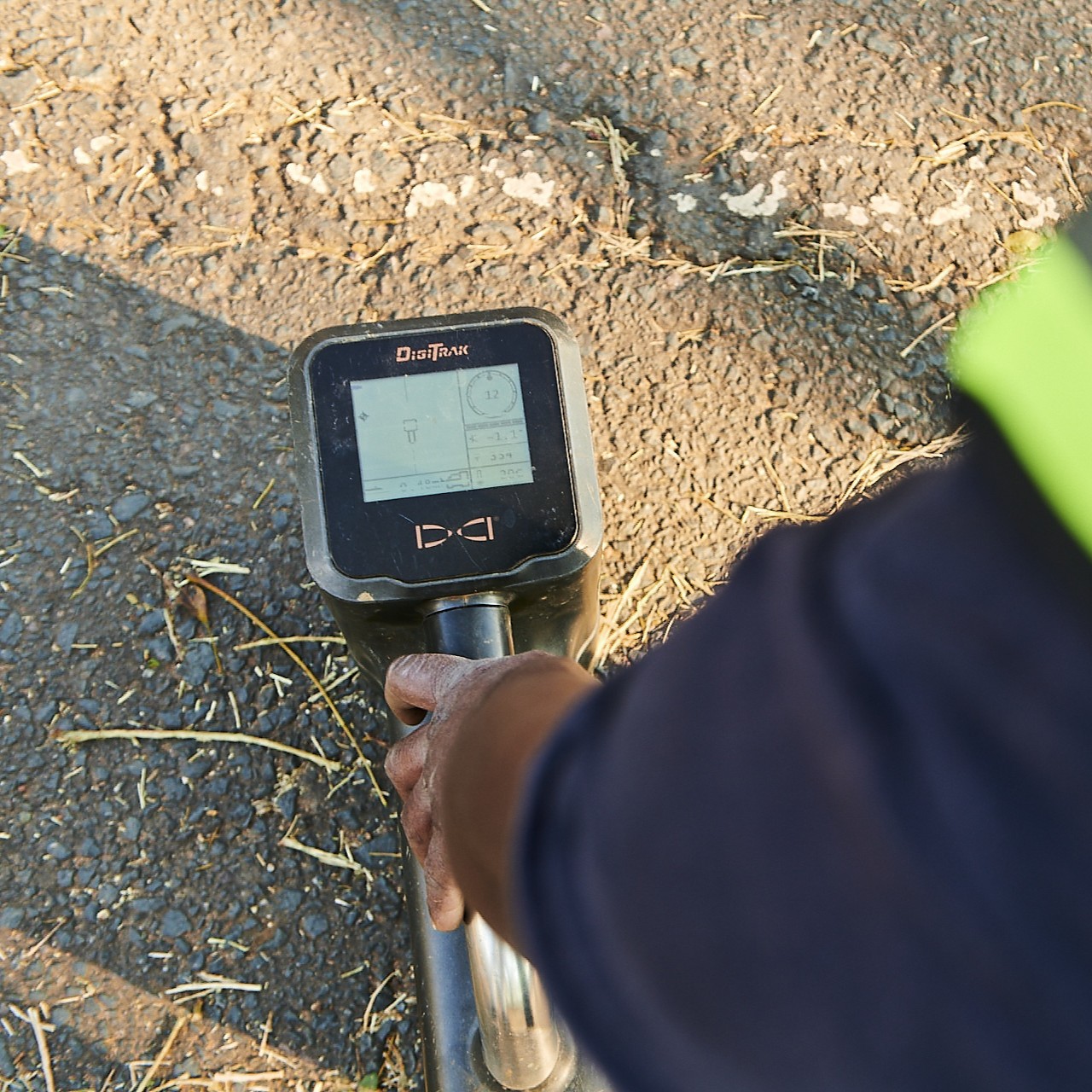
Using Ground Penetrating Radar (GPR) & CAT4 scanning Rolkon is able to locate underground services and reading below-ground conditions before work starts.
Ground Penetrating Radar (GPR) is used across a range of substrates from rock to soil. Using radar pulses to image the subsurface, GPR helps the team detect often-unmapped underground utilities that can cause endless delays and additional construction costs and civil projects if not identified.