
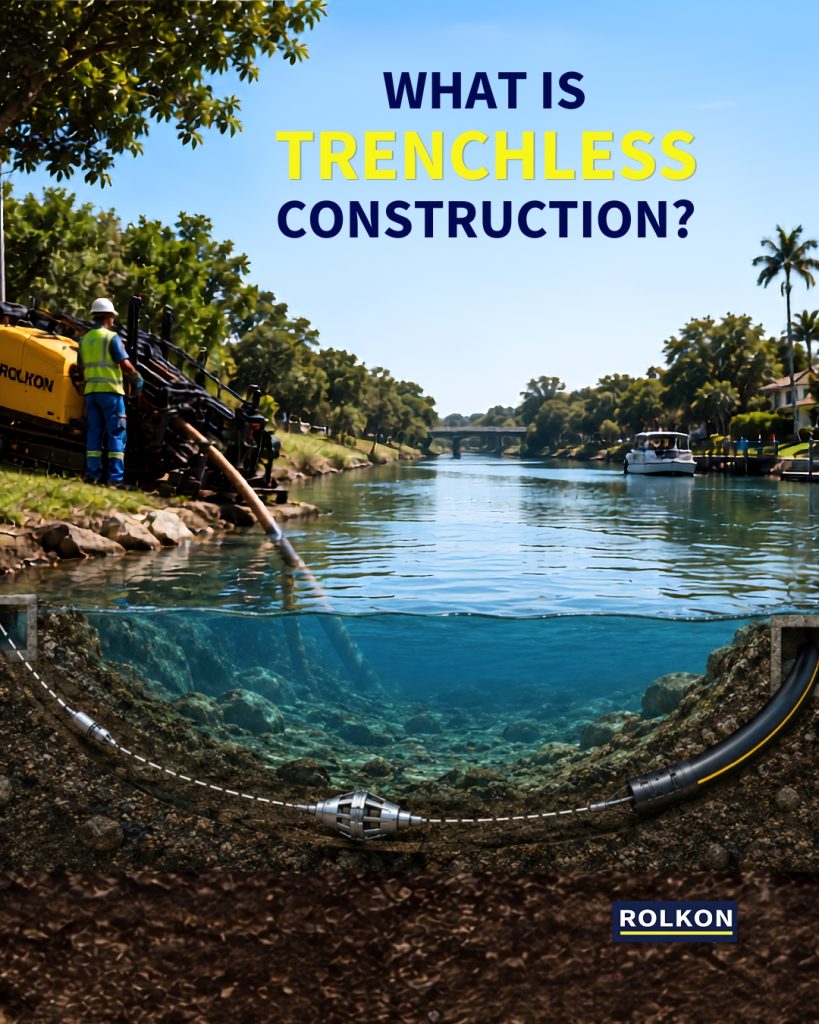
When most people think about installing or replacing underground infrastructure, they picture excavators, open trenches, road closures and significant disruption above ground. But extensive excavation is not always necessary.
At its core, trenchless construction enables underground infrastructure to be installed, repaired or replaced without the need for extensive surface excavation.
Using specialist methods such as Horizontal Directional Drilling (HDD) and pipe cracking or bursting, infrastructure can be delivered beneath roads, rail lines, rivers, wetlands and built environments while keeping surface disturbance to a minimum.
What Infrastructure Can Be Delivered Using Trenchless Methods?
Trenchless construction can be used across a wide range of underground infrastructure, including:
- Water pipelines
- Sewer pipelines
- Stormwater infrastructure
- Electrical services
- Fibre and telecommunications
- Other underground pipelines and utilities
The appropriate trenchless method depends on the infrastructure being installed or replaced, the existing underground environment, ground conditions and the requirements of the individual project.
How Does Trenchless Construction Work?
There are different trenchless methods for different infrastructure challenges.
Horizontal Directional Drilling (HDD) uses specialist drilling equipment to create a planned underground bore between entry and exit points. The bore can be steered beneath surface obstacles before the required pipe or sleeve is pulled into position.
Pipe cracking or bursting follows the route of an existing underground pipeline. The old pipe is fractured while a replacement pipe is pulled into its place, allowing ageing infrastructure to be replaced without excavating the entire pipeline route.
Before work begins, underground services scanning, including Ground Penetrating Radar (GPR), can be used to identify existing services and obstacles. This provides important information for route planning and helps reduce the risk of damaging existing underground infrastructure.
Working Below. Minimising the Impact Above.
One of the defining differences between trenchless construction and conventional open trenching is the amount of surface excavation required.
The technology and specialist work may take place below ground, but the difference is often most visible above it – Less excavation.
Less disruption. Less reinstatement.
For infrastructure that needs to pass beneath an active road, railway, river, wetland or built environment, trenchless construction provides another way to approach underground delivery.
It’s time to Ditch the Trench.


