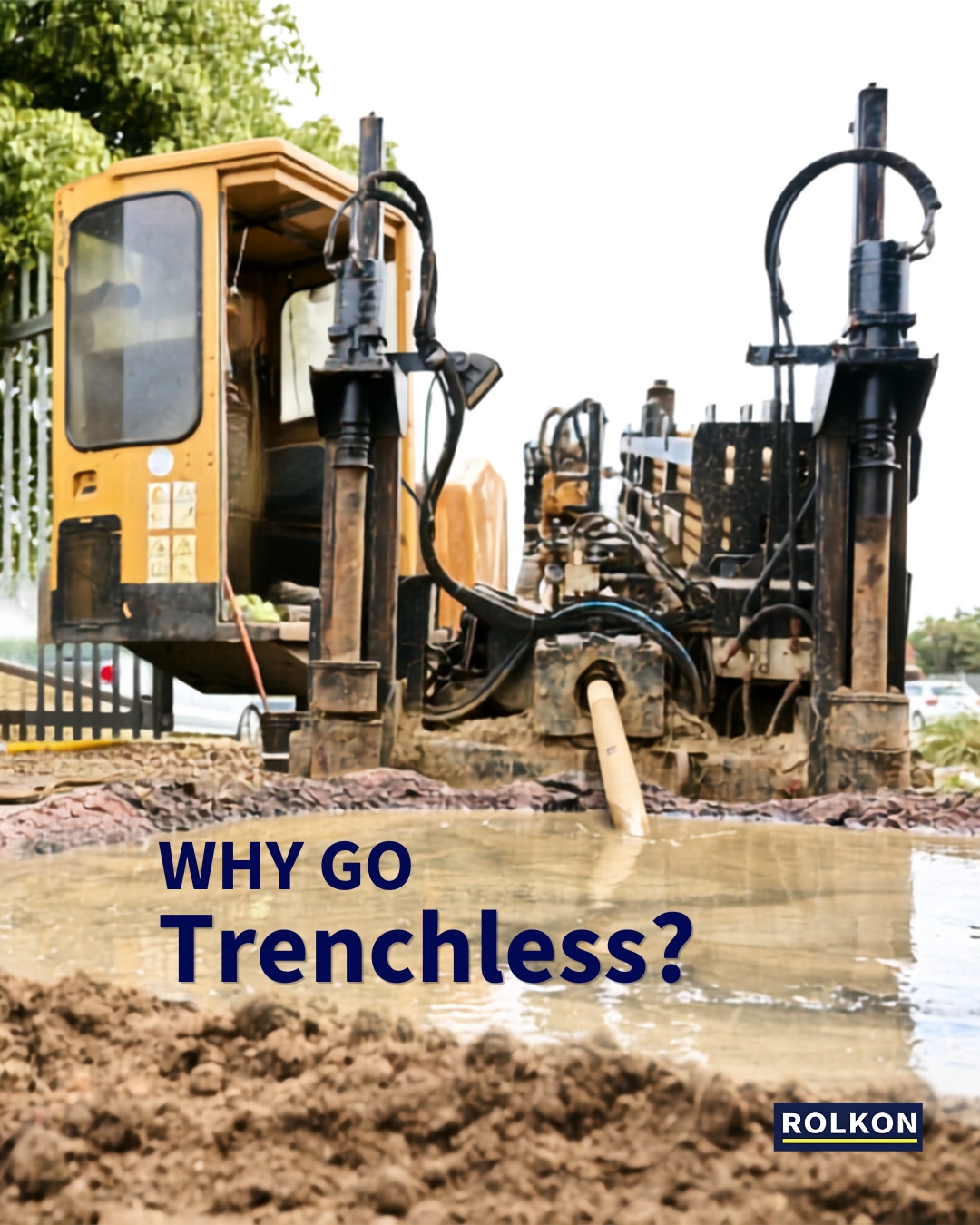
35 metres. Four petroleum lines. One ocean.
A relatively short underground installation can still present a complex engineering challenge.
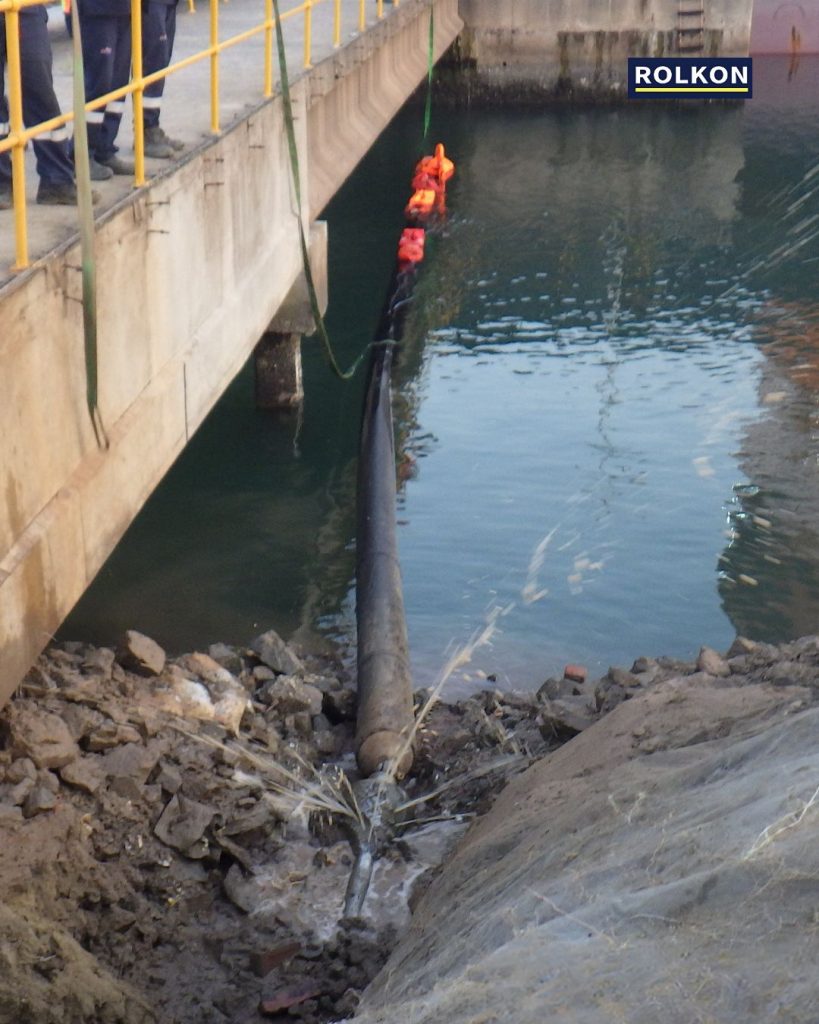
That was the case on a recent Rolkon project in Bayhead, within the Durban Harbour, where Rolkon was appointed by Stefanutti Stocks to undertake a Horizontal Directional Drilling (HDD) installation. The project required the installation of a 35m-long, 280mm HDPE suction pipe, extending from dry land into the ocean. The purpose was to change the fire-reticulation network’s water source from freshwater to raw seawater.
But the route between land and sea presented several significant challenges.
Four Petroleum Lines Across the Route
Four existing petroleum lines, each approximately 500mm in diameter, crossed the proposed route at a depth of around 1.5m below ground level. The new 280mm pipe had to be installed at approximately 3m below ground, passing below the existing infrastructure before continuing into the ocean.
In an environment such as Bayhead, where multiple networks operate within a concentrated precinct, protecting existing services was critical in determining how to approach the installation.
Keeping the Ocean Out
The existing petroleum infrastructure wasn’t the only challenge. The new suction pipe which extend into the ocean had to be managed to prevent seawater from flooding back into the dry-land working area during installation.
Conventional open trenching was therefore not considered a suitable option for the site.
Instead, HDD allowed the new pipe route to be established below the existing petroleum lines. This extended towards the ocean without opening a trench through the area and into the water.
Planning the Installation
Rolkon and Stef-Stocks developed a detailed installation plan to manage the specific risks presented by the site.
Particular attention was given to two critical requirements:
- Safely navigating beneath the four existing petroleum lines.
- Preventing seawater from flooding back into the working area during installation.
With the route and execution carefully planned around these constraints, the installation was completed safely and successfully.
When the Challenge is Bigger Than the Bore
While the bore itself was only 35 metres, this project demonstrated why the complexity of an HDD installation can’t necessarily be measured by length alone. What mattered was the site surrounding, identifying the risks and developing an installation method to suit conditions on the ground, and below it.